

The Constant is Change
Q1 2026 | Vol. 76, Issue 1
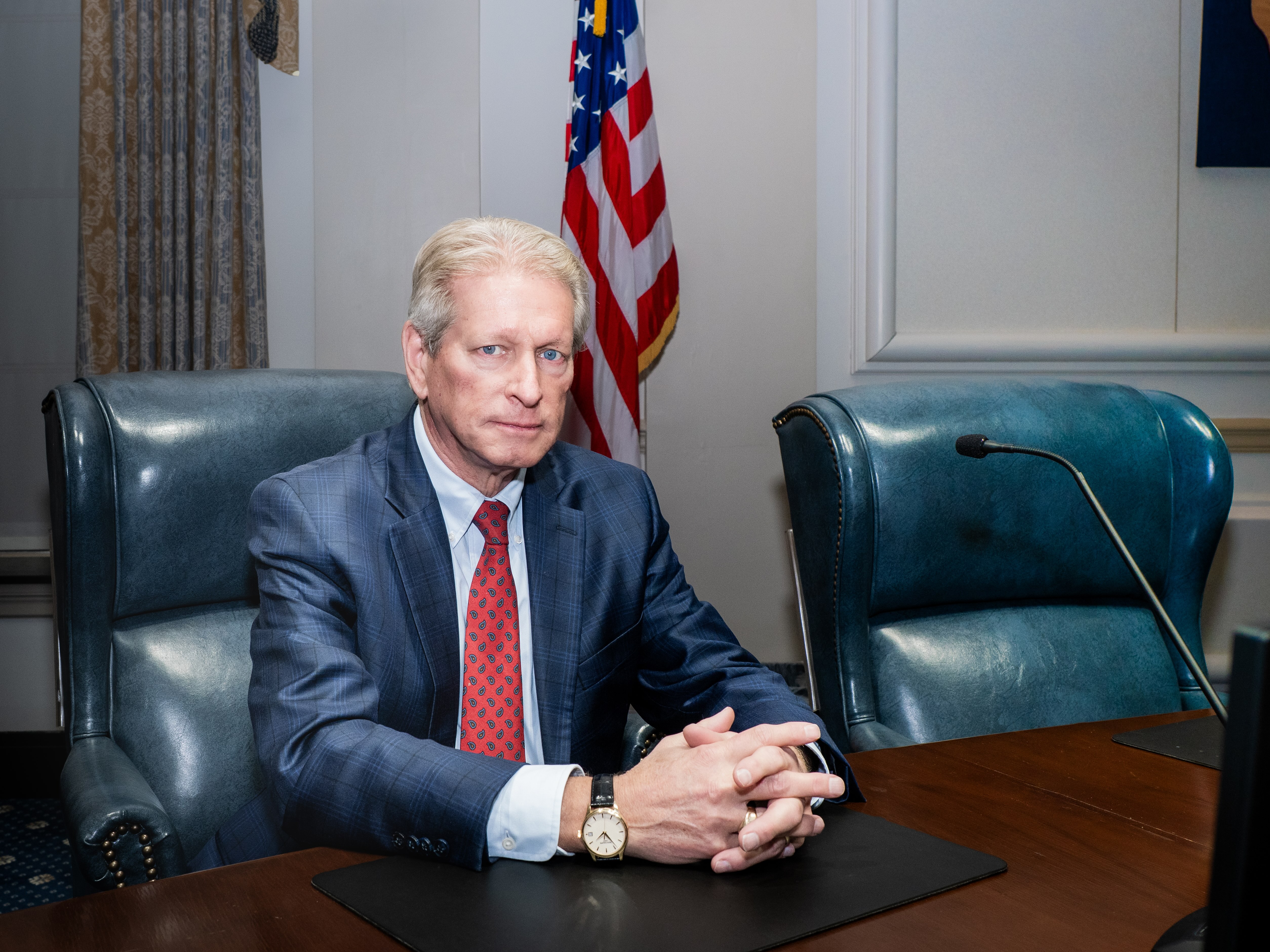
Public office is constantly compelling. Fifty years ago, 20 years ago, five years ago, now—it’s hard to find a period absent of changeful issues for government. For City Councilman Robert Clark of Winston-Salem, 25 years of elected municipal service has shown the array—population changes, economic seas both smooth and stormy, business closures and recruitments, political shifts and social movements, housing and affordability conversations, a pandemic and plenty more to list— informing a sense of what to be ready for and how local it can all be.
Not as local as demand for, say, curbside leaf collection—“I get more calls on that than anything,” Clark noted—but it all adds up for the growing city of roughly 255,000 people, currently North Carolina’s fifth-biggest municipality.
Southern City visited with Clark, a League Board of Directors member, at Winston-Salem City Hall in December for a look back on his local service to date and how he’s seen the city evolve over his lifetime, how he’s appreciated the opportunity to help navigate the large and small, and what he’s reading in the tea leaves—or tobacco leaves, as might be more appropriate for the community historically nicknamed “Camel City.”
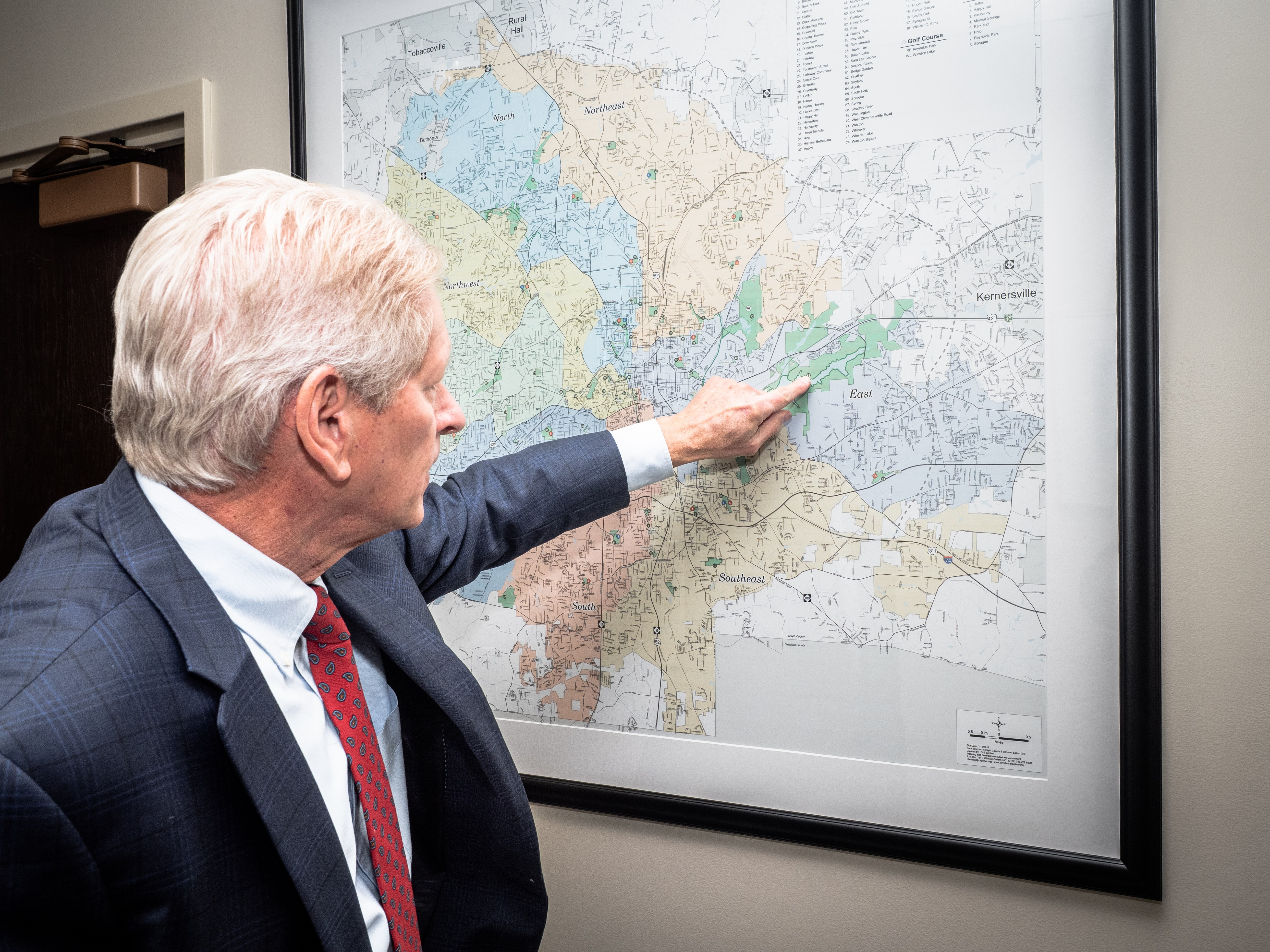
“I take a lot of satisfaction in helping folks that may be running into issues in their day-to-day lives,” said Clark, who represents the city’s predominantly residential West Ward. He joined the city council in 2001 but is essentially a lifetime resident, having moved to Winston-Salem at a young age, when his family relocated from South Carolina in the mid-1960s—a decade that saw the start of broadly influenced economic transitions.
“Winston-Salem in the ‘80s and ‘90s, and even into this century, we had some tough economic news,” Clark said while describing the city’s powerhouse past in textiles and tobacco and the shifting nature of any industry. For tobacco, the popularity of smoking products began rolling back in the ‘60s, eventually felt in Winston-Salem, where tobacco leader R.J. Reynolds had been founded in the late 1800s, employing thousands of locals at a time into the 20th century before the headquarters moved out of town and area factories closed in the 1980s. HanesBrands and Wachovia were among other major employers whose footprints shifted or decreased.
“There really was a need to transition our economy from what had taken us through the previous 100 years to what’s going to take us into the next 100 years,” Clark said. “And I felt like we needed a local government that would be pro-economic development and would be a partner with the private sector into transforming our economy from what it was into what it will be.”
Like other Triad cities in transition, Winston-Salem began marketing its assets and talents to companies looking for sites and in 2004 announced a big recruitment with Dell computer manufacturing. “It made the front page of The Wall Street Journal, because every city wanted Dell,” Clark said. “It proved that we have a good product to sell here, and if we work hard at it, we’ll have some success at it. And we did.”
As global market demands continued to change, Dell moved from Winston- Salem about five years later, but more successes arrived, like the city’s outstanding present-day biotech growth and its billion-dollar-plus investment in facilities downtown.
“The biggest economic success is our work with Wake Forest University in the biotech area,” Clark said. “We took all of our old, empty tobacco plants, and they’re now high-tech biotech research-and-development” spaces. Caterpillar also runs a massive manufacturing plant in the city. Clark said the local rail lines were a key to that recruitment: “One thing I’ve learned in economic development is that most big folks with major investments have specific criteria for what they want. They tell you what they’re looking for, and you respond.”
Community college job-training programs have also readied residents for these opportunities, but Clark highlighted an important takeaway in all this—the speed of industrial turnover and market change.
“It is a never-ending process because of the shorter lifecycle of jobs today,” he said. “You always need to be recruiting new folks because the obsolescence of jobs becomes greater and greater.” He also pointed to the changes in artificial intelligence and keeping up with possibilities, both good and challenging.
“Your job might not be eliminated by AI,” he said, “but you might be eliminated by someone who knows how to use AI better than you.”
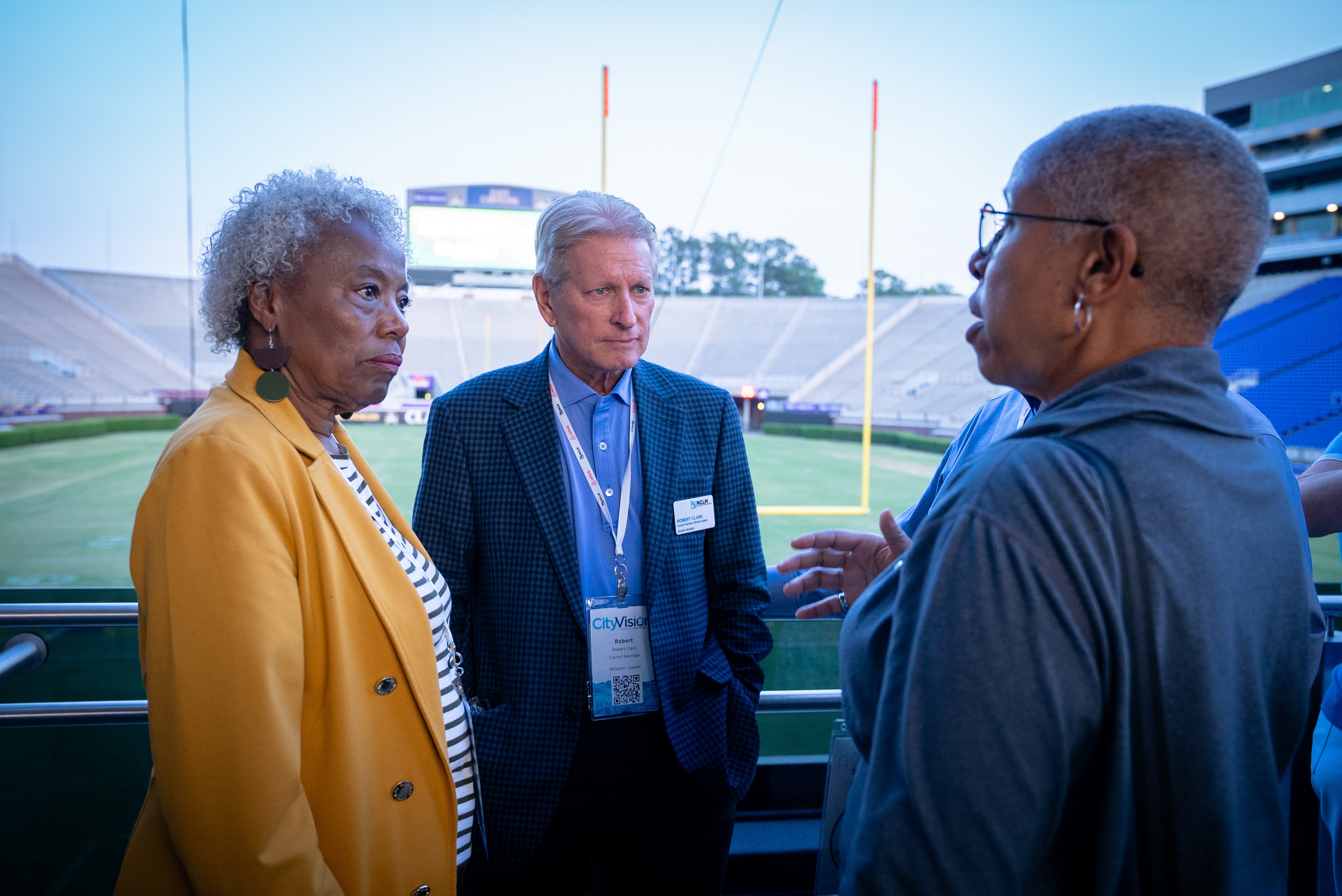
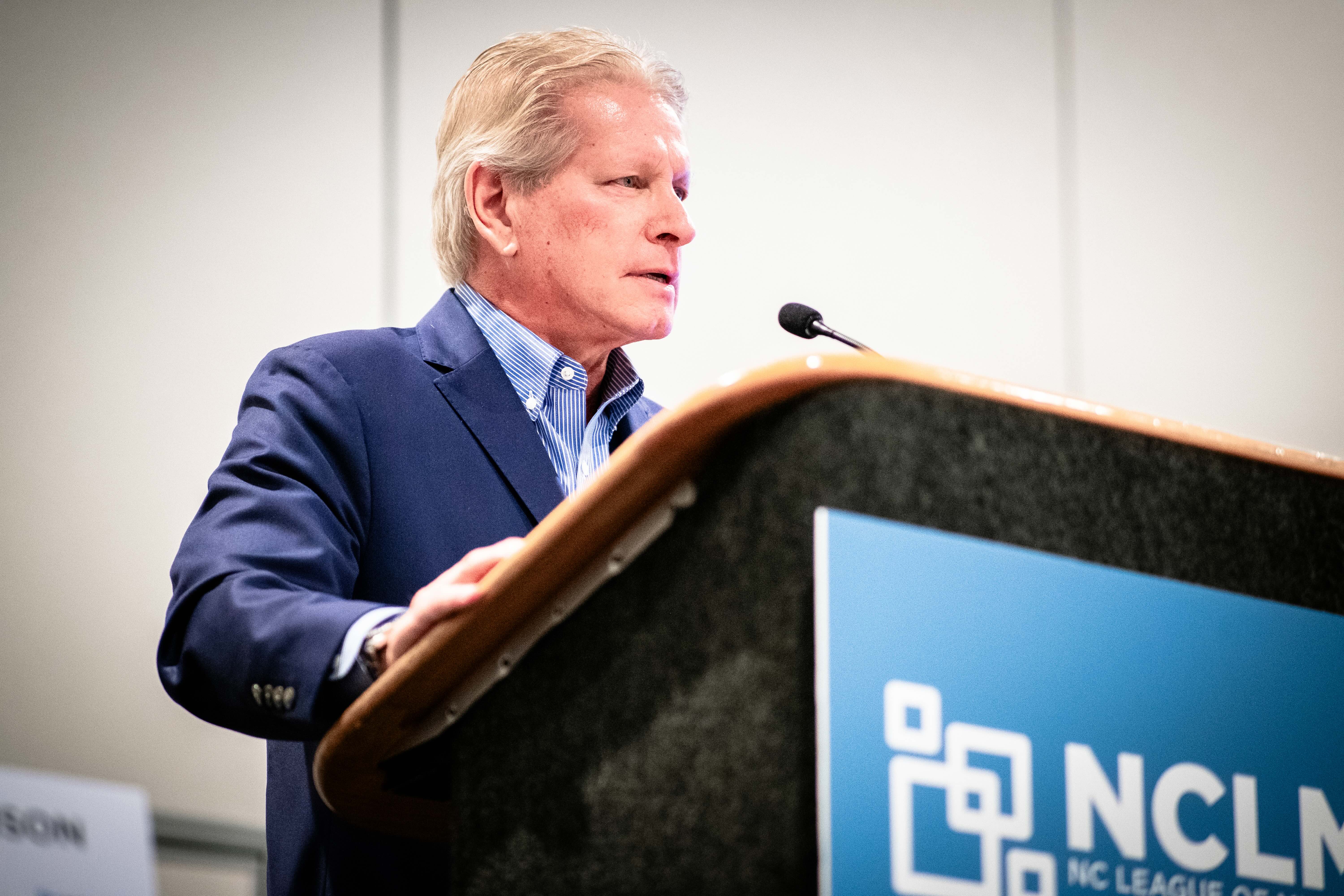
A source of Clark’s appreciation for all of this is his background in industry and companies he’s run with global reach, including Leesona Industries, maker of textile winding equipment, such as toothbrush bristles and fibers that 3M uses in filters for dialysis equipment. He’s also held numerous community roles, serving public and private boards and organizations (Triad Business Bank, Rotary, Better Business Bureau, Chamber of Commerce) and chairing the city’s Finance Committee. Clark and his wife, Debbie, are active in their church and have three grown children and two granddaughters.
Whether global or kitchen table, it’s all local in his public office role, with sensitivities for the support structure around a healthy community economy and affecting tides.
This is the gem of municipal leadership, for Clark, in the ability to help create a prosperous scene. “My point is I think I bring a broad business experience. Running a small company, you do everything from purchasing to payroll, hiring and firing, the whole gamut. And I think that’s business knowledge or life skills knowledge that local governments need.”
While Clark’s ward is mainly residential, it all connects and highlights how expansive and yet immediate the local government context is.
“When you think of the services you get from government—you get up, you use water and sewer, you drive on the road, there’s a stoplight or stop sign, police and firemen protect your house, you may take your kids to school, you might go by the library. All of those services are locally provided,” Clark said. “Some of those are county, some of those are city. But they’re all locally provided.”
He recognizes the significance of all Winston-Salem has done and can do.
“You know the old saying, ‘If you can’t run with the big dogs, stay on the porch,’” Clark said. “Well, we could come off the porch and compete.”

About the author
Ben Brown
Communications & Multimedia Strategist
Supports the League’s communication strategies as the in-house multimedia producer dedicated to improving awareness of membership services, advocacy campaigns, and organizational goals.
