

Zeb Smathers Lives & Leads from the Heart of Canton
Q4 2025 | Vol. 75, Issue 4
THE FIRST CAMPAIGN SIGN READ: ZEB SMATHERS. BELIEVE IN CANTON.
Just in the past five or so years, Canton has been at the center of some of the state’s largest natural disasters and economic crises. Tropical Storm Fred in 2021 took the lives of six people and inflicted widespread damage, including the destruction of the house of Smathers’ sister, Anna. Then the paper mill, Canton’s local institution that employed 1,100-plus people in a town of about 4,500, closed for good after 115 years. Finally, Hurricane Helene struck western North Carolina in 2024, causing damage to the area that, while well-documented, remains inconceivable even a year later. Anna lost her home again.
Yet today and through it all, Canton is thriving. It is alive and growing, with new people, new shops, and new energy. It still goes by “Paper Town.” It still moves ahead with impressive momentum, because the engine of Canton, according to Smathers, lies deep within the real essence of Canton, in a place not easily derailed.
“We are ‘Paper Town,’” said Mayor Smathers. “We’re a mill town. We’re a mill town even now without the mill, because it’s not about the machines and the four walls—it’s about the history, the people that came before us, and the gritty attitude that ties it all together to make this home.”
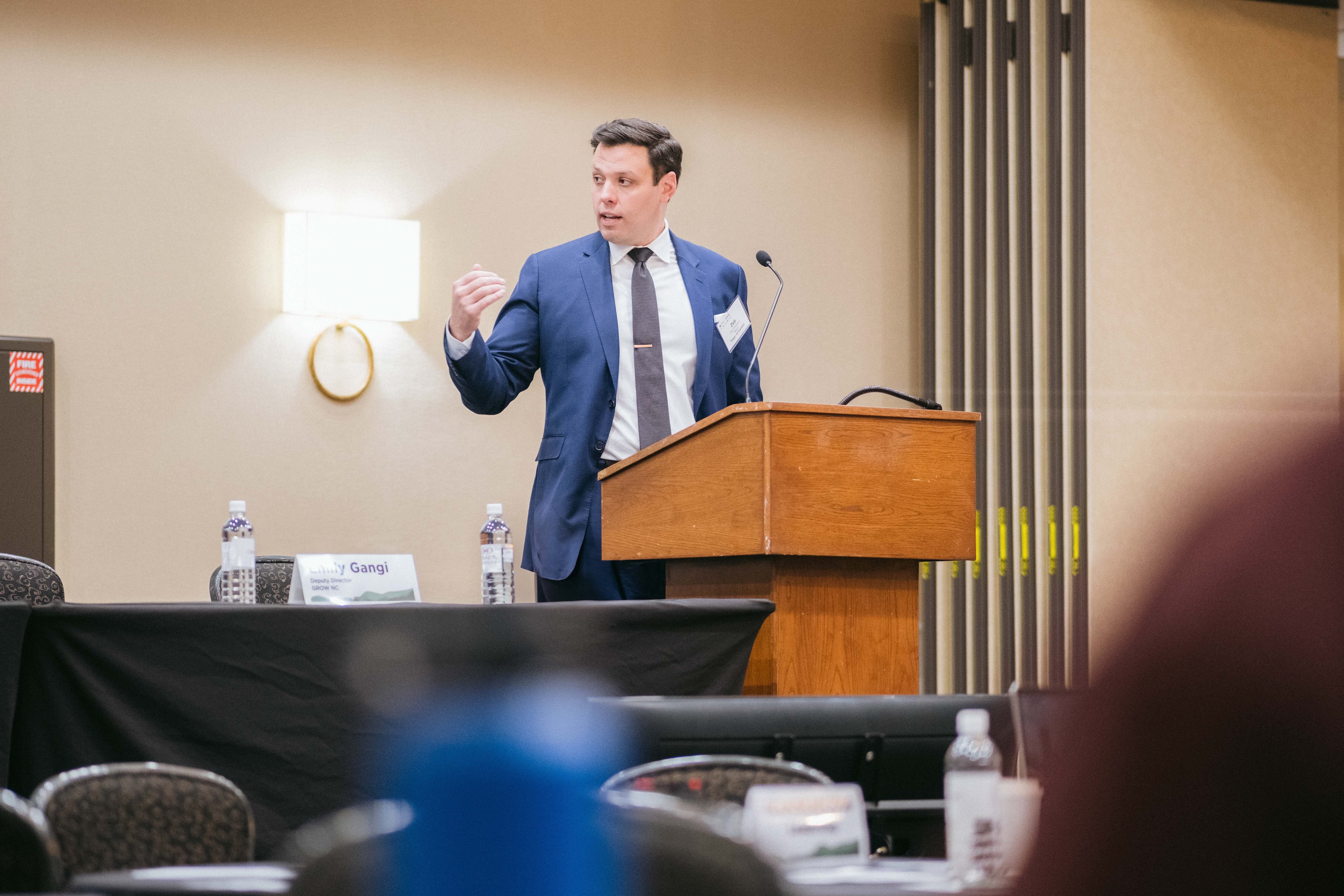
When speaking of Canton for Southern City magazine, Smathers spoke not just from a place of pride but also a well-earned place in local history. His father Pat served as mayor from 1999 to 2011 and, according to a 2018 article from the Smoky Mountain news, the Smathers are “one of Haywood County’s oldest clans … involved in the commercial, political, social or spiritual life of this place for the past two centuries.” Smathers’ son, Stone, is a ninth-generation Canton community member on both sides.
Smathers points to his grandfather Loranzo as one of the family’s personifying members. “No one’s had more of an effect on my life than him, and I only knew him for 11 years,” Smathers said. Though never a public official, Loranzo was held as one of Canton’s most prominent residents, as he owned the local supermarket, which also served as the community meeting space. Despite the times, it was never segregated. “How you care for others is a major part of my public service and personal doctrine.”
Smathers left Canton for college—Duke, and then UNC-Chapel Hill for law school—but always planned to return. With his upbringing, local concerns and potential solutions were not theoretical. Rather, they were attainable, and making a difference was truly an option. He had seen it done and knew he could walk in those same steps. Smathers was first elected to the town board in 2013.
“Canton was a great place to grow up. But Canton was dying. There were no floods, no hurricanes; the mill was still open, but Canton was dying,” said Smathers. “Downtown was mostly boarded up, and there was always this struggle to rebrand Canton and turn it into something that it wasn’t. My first campaign had a renewed sense of optimism. It was, ‘Look, we don’t have to settle for the narrative that our best days are behind us. We can be authentic and tell the story of who we truly are.’
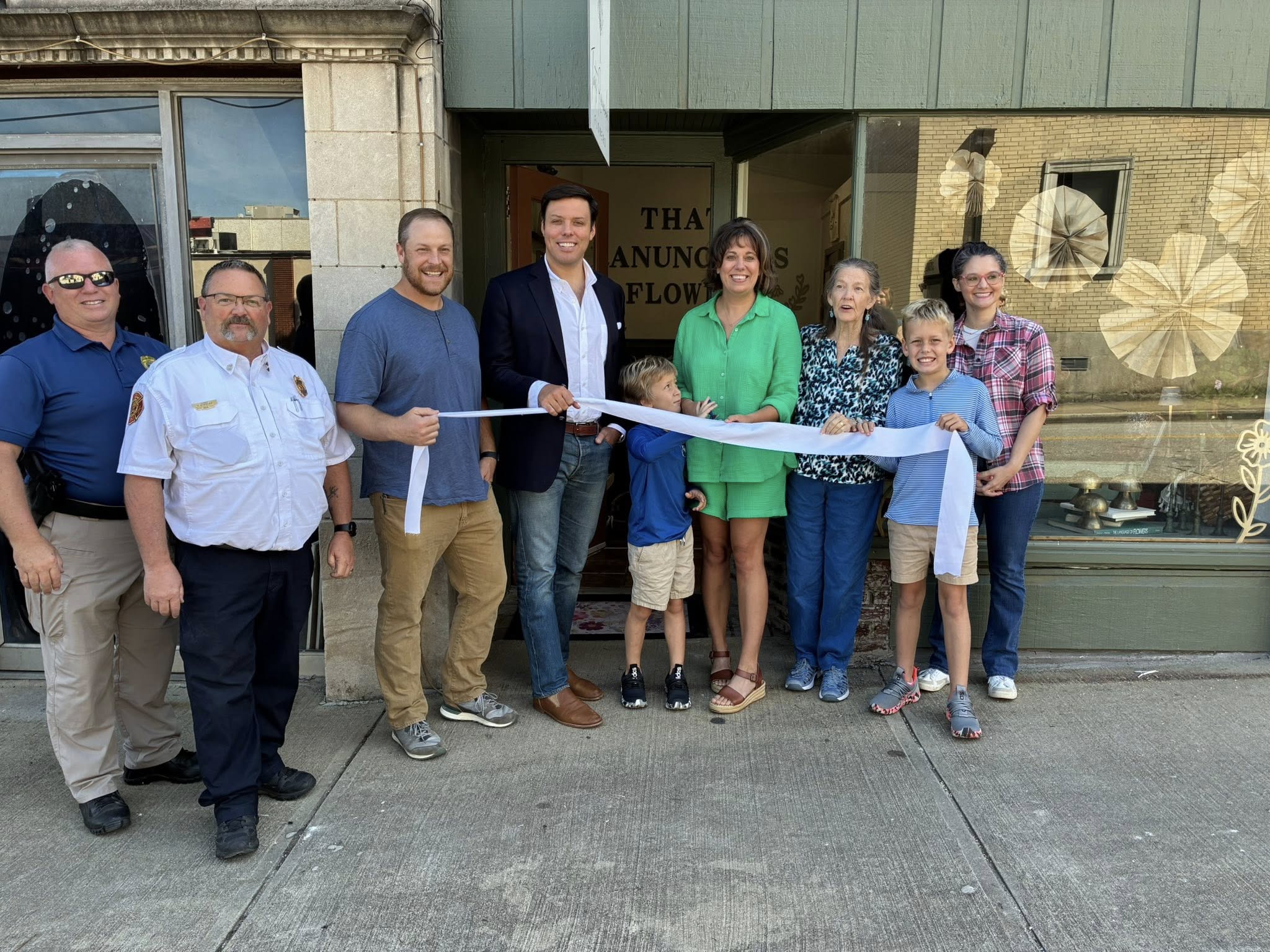
“The moment we started embracing ourselves as ‘Paper Town,’ as a mill town, positive things started happening,” said Smathers.
Through Smathers’ time in office, the downtown occupancy rate ballooned from 20% to nearly 90%. Larger economic forces, particularly those impacting nearby Asheville, certainly benefited Canton too; but Smathers believes that much of the resurgence was simply because of a reintroduced hometown pride.
“You see it in sports, and you see it in the military. It’s people that may have different backgrounds and differing beliefs, but you have one goal,” Smathers said. “I've played enough sports, been on winning teams and losing teams, that if you're on a losing streak before you start winning games, you got to believe that you can win. We had to build the belief.”
For the first half of his public service tenure, up until about 2019, the focus on building local inspiration paid dividends. Smathers recalled the difficult decisions, the local government dilemmas and the adjustment to public life, but overshadowing those moments are memories of Canton’s rise into prominence among western North Carolina destinations. It was a better home for its longtime residents, and it was a new home for many others. “We were evolving,” Smathers said.
The second half of his public service tenure has been more defining. It will almost certainly be how Smathers is remembered. First, it was COVID-19. Smathers and town staff focused on people-first solutions, such as inventing the “reverse parade” during the holiday season. Instead of people standing to the sides while a parade went through the streets, the town arranged for the parade—the floats and attractions—to line the road while the residents drove through. “The joy on our residents’ faces, particularly the children. That speaks to the practical leadership, the solution finding that happens in every town across the state, every single day. I could be President of the United States, and it still wouldn’t beat the Christmas Parade of 2020,” said Smathers.
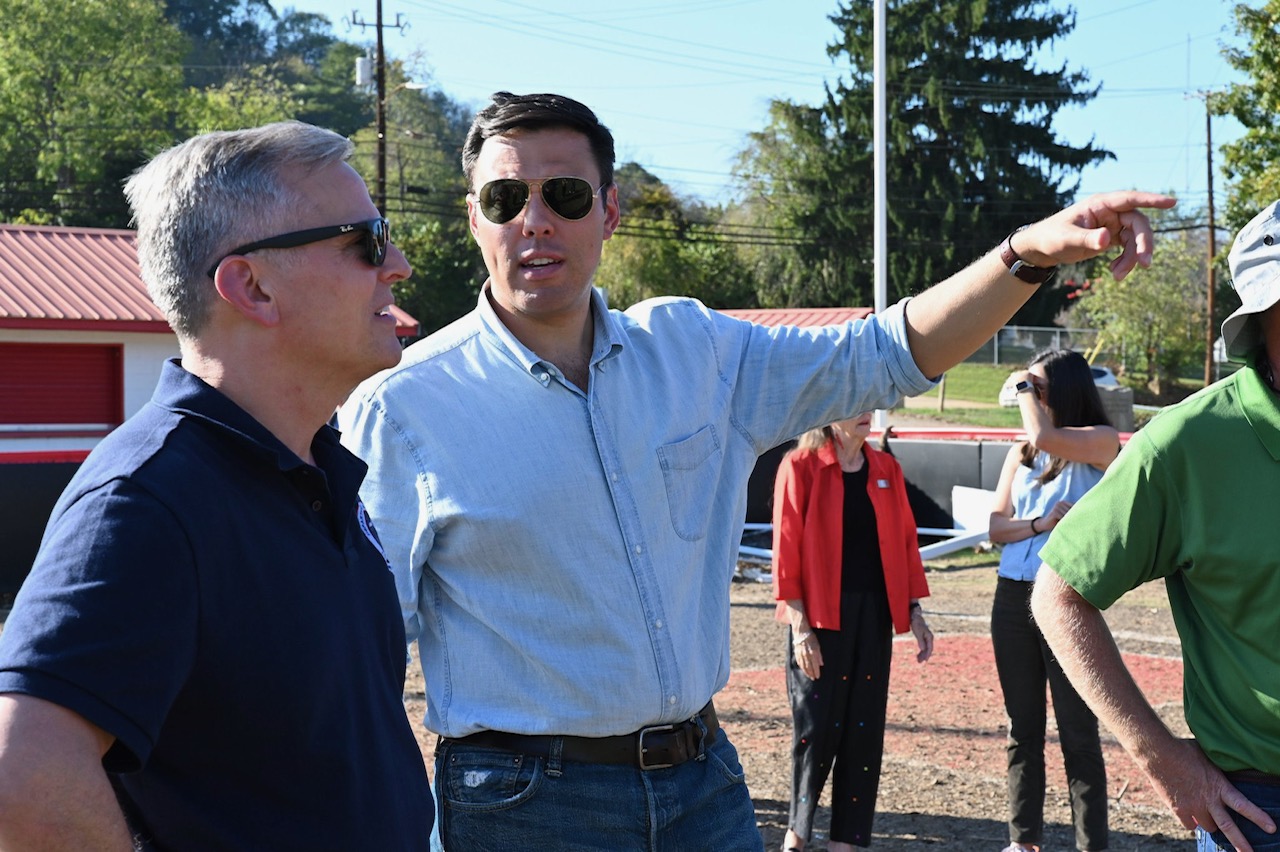
Second, it was Tropical Storm Fred. Haywood County suffered more than $300 million in damages, and Canton lost its river district, all town services, and town hall. Smathers remembered being in the river himself, helping pull people out. “We were running our town off plastic tables and chairs. We lost everything,” Smathers said.
Third, it was the Pactiv-Evergreen mill closure—the sudden end of a massive economic engine and an immediate loss of more than a thousand regional jobs. Equally devastating, it was a blow directly to the identity of Canton, or ‘Paper Town.’
And finally, it was Hurricane Helene. The statistics have been well reported—on lives lost, homes destroyed, roads washed away, communities cut off from outside contact, and overall environmental and economic devastation. Canton was not spared. Unlike Tropical Storm Fred, however, Canton was more prepared and better resourced. In many ways, they stand as a success story. Canton was developing plans and building relationships in the wake of Fred, not just with outside resources, but internally as well.
“Trust and legitimacy with your citizens, your community and your partners doesn’t happen on zero hour,” said Smathers. “That was work done well in advance.”
Through crisis after crisis, the town has refortified, become better connected, learned how best to help one another, and when the big moment arrived, they provided an example for towns not just in western North Carolina, but across the state.
“The success we’re having now, you’re seeing it not in spite of Helene, but through Helene,” said Smathers. “You’re seeing the grit and grace of these people in the mountains, and you’re seeing the willingness to help from people all over. We saw the best of North Carolina during Helene. We saw the best of the United States.”
Smathers is Canton through-and-through, but as he clearly states, it’s not just the geography of Canton or the makeup of Canton, but rather the heart of Canton—a heart that also exists through similarly sized towns across the state and country, for which Smathers has a deep appreciation. All of them are homes, all of them have rich histories. All of them have a tangible worth and define us, economically and culturally. They are who we are.
Smathers lives this story, and wraps up that story better, in his own words:
“These people and their sacrifices do not deserve good, they deserve great. We have to accept great. That’s our challenge. ... My son, he’s not going to remember Fred. He’s not going to remember the mill workers or the whistles [that blew from the mill each day]. He may remember a little of Helene. But I promise you, he and the ones that come after, they will remember if we met the moment. Did we bring people together? Did we respond? Did we go for that great idea? Did we build something that honors the ones that came before us?
“It’s a big idea, but it’s our legacy. This state is a big idea. This country is a big idea. It doesn’t mean it’s easy, but it means it’s worth pursuing. Think of John F. Kennedy’s New Frontier speech and his Moonshot. Well that applies here, too. This is the Milltown Moonshot, as it should be, as it should be in every town of every size in this state. That’s what we are, and that’s how we got here.
“We got here by going big. We went big and we need to do it again.”

About the author
Jack Cassidy
Learning & Development Project Manager
Works with the League's Advancing Municipal Leaders education program to develop learning opportunities and course content that meets members' individual and community needs.
